Wednesday, November 30, 2016

Kyovember

Kyo Maclear. Enough said.

Except that's actually not nearly enough. Kyo Maclear publishes amazing children's books, and I've just started reading one of her novels for adults, for which I have high hopes. A quick search also revealed that she keeps a blog that includes the suggestion of children's books (and also books for adults) with every post! See here on the topic of fear (and the results of the election), for example. (Also on the topic of that blog post, I've been thinking about reading the Moomin novels as of late, since 1/Edition, where I saw one of the first print runs of the reprint of the first book of the series, and now lo and behold, Moomin! And around the end of October or so I started listening to Leonard Cohen's Hallelujah and covers of it on repeat, and then the sad news of his passing came shortly after. I'm not sure whether I'm simply paying more attention to things that I'm currently very into, or what. I mean, probably most definitely the former, but still. Whoa.)

Note: I will be cross-posting reviews in slightly altered format on my library's For Your Leisure blog, so there will be some overlap in content. Hopefully not too much, but there's only so many books I can read and only so much music I can listen to, to divide up between two blogs!
Note: As I was making sure I was correctly using the word "enamoured", or more specifically using the correct preposition with it - I was learning toward "of", though I'm pretty sure I've read "enamoured by" or at least "enamoured with" before, so I wanted to be sure - I came across this link to Google Ngram and it's the bee's knees!


  1. The Good Little Book by Kyo Maclear, illustrated by Marion Arbona
    • This actually is a good little book, in a variety of ways. I would even go beyond that and say it's almost a great little book, if that wouldn't destroy the continuity in references within the book to the book itself. From the very beginning till the very end, Kyo Maclear has created a charming read that sucks the reader into the story both in the progression of the story and by alluding to the reader as one of the characters in the book! Way to break the fourth barrier in a subtle manner! If you're into children's books that double as adult's picture books (because let's not kid ourselves: a good chunk of children's picture books reading is done by the adults), this - and other Kyo Maclear reads - should most definitely be on your list! 
    • As a bit of an aside, though not really because they're integral to the book: the illustrations are absolutely gorgeous, and not in a way that's standoffish, but engaging and approachable. I don't know how she does it, but Maclear has a way of finding and teaming up with these incredible illustrators (see Isabell Arsenault as well in their equally amazing Virginia Wolf), and I love the results.
  2. Mr.Flux by Kyo Maclear, illustrated by Matte Stephens
    • Punny, well-written, non-sequitor in a way that follows the haphazard nature of Mr.Flux himself, the story progresses in a predictable fashion, yet takes you for a ride all the same. Beautifully illustrated, this book most likely wouldn't change the minds of any child (or anyone) who absolutely abhors change, but is a great reminder that the status quo is not always for the best, and that change, despite our efforts, is always inevitable - so why not embrace it?
  3. Julia, Child by Kyo Maclear, illustrated by Julie Morstad
    • Another illustrator I love! Check our her How To book. As for the story itself, I was a bit disappointed. I mean, I get that we want to empower children and let them know that sometimes adults can be weird and seem irrational and do (sometimes seemingly) illogical things, but it was a bit forced.
  4. The Specific Ocean by Kyo Maclear, illustrated by Katty Maurey
    • Maclear captured the spirit of a child throwing her tantrum, only to succumb to what it was she was rebelling against, but the second part about the specific ocean seemed almost as though disconnected from the first part of the story. The story was alright, and would be a good read for a child who might not want to go exploring or on vacation, but I would have preferred to have the specific ocean story in a separate book altogether rather than crammed in with the first part.
  5. Le Coeur de Monsieur Gauguin par Marie-Danielle Croteau, illustrated by Isabelle Arsenault
    • I've already talked about Isabelle Arsenault and how much I adore her illustrations. They work especially well in this context, the paint strokes - I'm still not sure whether they are real strokes or if she coloured in such a way as to make the texture present - on the windowsills and the painting itself were a wonderful thing to behold. Now I'm just wondering how much of it is historically accurate.
  6. Spork by Kyo Maclear, illustrated by Isabelle Arsenault
    • Delightful (as always)! Even the little description on the inside the book jacket just hooks you in - they're actually a couple of the lines from the story itself. Maclear uses Spork - neither a spoon nor a fork - to illustrate how it's not necessary to try to conform to one (spoon) or the other (fork) group if you don't feel like you belong, and that you can find your own place (inside the fist of a toddler) doing what only you can do. Of course, it's a bit optimistic in that conclusion, but at the same time, Maclear also tackles the fear of mixing with outgroups when she writes that the spoons stay with the spoons, the forks with forks, and that there's generally no mixing; of course there are exceptions, but they're rare. It's just accepted as the way it is in the world of the kitchen cupboard, but there's something in Maclear highlighting this little detail of utensil life that stood out to me: it might just be that she brought it up at all, actually. Hopefully whatever child reads, or is read, this book will also be struck by this mention and start to question why it is that way.
Hopefully you don't think I'm just trying to plump up my list with picture books at this point. Picture books that are well-written and illustrated are appealing to both children and adults alike, and that, I think, is one of the most crucial elements of success for a picture book (author & artist both): how much it engages all parties reading, and whether it has a message or reason for being beyond blind entertainment*.

*Then again, maybe blind entertainment is good enough. It really depends what you're looking for, or what the child is looking for. From my perspective though, it really frustrates me to see picture books that don't seem to have a point to them, and just kind of drag on without any reason to exist (that I can discern at least). The only thing I can say is that perhaps they're just not for me.

Moving on!
  1. An Unattractive Vampire by Jim McDoniel (see review here also)
    • McDoniel uses footnotes in An Unattractive Vampire! And carried it off to comic effect, aided most likely also by the overall tone of the entire novel, which you cannot take seriously in the least. I thought for the longest time that maybe, there would be some revelation towards the end that Amanda & Simon are actually the descendants of Erasmus Martin, especially when Yulric's gaze lingered on Simon's back after he had given the orders to all the vampires, but I suppose that would have been much too neat for such a lax style of writing. And I mean that in the best of ways, because it works for this novel. It's satire not even taking itself seriously, and the best (or worst, depending on how you like it - personally, I enjoy both!) part of it is that the tone coupled with the use of footnotes makes it practically impossible for the reader to be unaware of the satire. This is quite unlike, say, Jonathan Swift's A Modest Proposal, which maintains its veneer of seriousness until the very end, regardless of whether you catch on midway through reading it or not.
    • A fun read, though many things were left hanging - I suppose in the end they weren't really all that important, because this novel is not the sort where you would worry too much, not taking it seriously to begin with. I'm curious as to whether McDoniel will publish again, and what type of novel he might come out with if he does; I don't think a second iteration of An Unattractive Vampire, even with a completely different plot, would work again.
  2. Shawshank Redemption (1994)
    • !!!!! It's always the quiet ones.
  3. The Goonies (1985)
    • I was told it's a classic and that I should watch it, so I did, and I can see why it's a classic! It definitely has that sort of feel, although I'm sure it would have held much more charm as a child; watching it now, as an adult, I could only get to the point of mild amusement, which is not to say that it's boring, but it's not for me. I can see its appeal for children though! The good guys win after an arduous journey and although the little guy, who practically did half the work for his brother (e.g. "it'll be dangerous, so you might want to hold my hand"), didn't get the girl, it ended on a promising & humorous note nonetheless. Also! It gave off the message that blood doesn't determine who you are, and not to judge someone by how they look, as the Goonies were able to reconcile their differences with Sloth (as well as their own petty arguments).
  4. The Ninjabread Man by C.J. Leigh, illustrated by Chris Gall
    • Another picture book! I won this as part of a prize at a work party, and this book was what made me pick this over the other bundle of books. It's a fun retelling of the Gingerbread Man story, which has, from memory, a number of reincarnations already. He does, of course (SPOILER ALERT!) get outfoxed by the fox, which I kind of wish didn't happen because that's what happens in the Gingerbread Man story, in the end. At the very end, though, the authors include a recipe on how to create your very own Ninjabread man, which was quite a nice touch! I might just make my own Ninjabread man this year.
    • I just did a quick search on Goodreads trying to find the link to this book, and THERE ARE SO MANY NINJABREAD MAN BOOKS. Not as a series, but rather so many people have already written about Ninjabread men?!! In case you can't see it, each word is a separate link there; in case you weren't counting, that's 6 different Ninjabread men (including the one I'm reviewing here). I'm befuddled. I guess it's not that hard to think up, but come on! 6!
  5. LUDOVICO EINAUDI
    • I don't really know how I've existed thus far without knowing about Einaudi. I might have listened to his music before without knowing about it, perhaps? It's the sort of music that you listen to and think to yourself, "I'd take up piano again if it means I can play like this". An inordinate amount of time was spent on youtube listening to his compositions before realizing that we have his CDs available at the library. I also started learning to play Divenire and continued until my wrist went on strike. Those are the sorts of feelings Einaudi evokes in me.
  6. Fairy Tales From the Brothers Grimm edited by Philip Pullman
    • I did not know there was a fairytale that featured a sausage as one of the main characters. The mouse, the sausage, and the bird. In case you're interested, he - yes, he - is a bratwurst sausage. He swims around in the vegetable soup to season it, and depending on how much seasoning the soup needs, he might swim in there for a longer duration of time. That's certainly one that hasn't made the "classic fairytales" list!
    • All in all, revisiting fairytales that I've either heard or read as a child or absorbed indirectly simply by dint of their ubiquity has made it all the clearer to me that these tales are not all that clear cut in terms of what the takeaway is. I mean, they are, for sure! But at the same time, the details, once you think about them, are a bit disconcerting sometimes. Some characters you might expect to get punished go free, and some characteristics like passivity are rewarded (Sleeping Beauty, for example). I've also read another book on fairytales & variations that also did analyses of the tales and their morals, as well how the chosen adaptations fit into them, so it's not like I didn't realize any of this beforehand, but re-reading them as an adult really gives you new perspective. As in life, so in fairytales though, I guess (re: ambiguity of morality & laudable traits).
  7. Agnes Obel
    • I clicked on a twitter link that my friend had tweeted as she gushed about Obel coming to town, and I never looked back. Her music is totally my jam! My local library had Aventine, but I'm thinking about purchasing the CDs for keeps. Also, she's having a concert in Toronto come March!
  8. Fields of Blood by Karen Armstrong
    • Armstrong goes through religions around the world giving a pretty quick history of how religion ties in with/is inseparable from politics (quick as in 30 pages as opposed to a book or two that each could easily have taken up), and how the agrarian lifestyle - and the accompanying violence - was a common thread throughout. There's also the sense that autocratic governments seem to be the most successful ones to operate; rule through might rather than through right, I suppose, is the way to go, regardless of whether that's in keeping with your ideals or not. And Armstrong points out several cases where rulers, such as Ashoka, were at a loss as to what to do to reconcile their beliefs in a peaceful rule with the need to keep a military force. It makes sense though, that military force & sheer ruthlessness should win out, considering the peaceful alternatives that are ideals. I'm not saying ideals can never come to fruition - although I do tend to lean way over the fence and into the next part of town in that direction when considering ideals that refuse to adapt in order to survive, I suppose - but rather that it might make more sense to force the existing order into reform, rule with an iron fist, before/while trying to cultivate the ideal. That being said, we'd wind up with the dilemma of, does might make right & do the ends justify the means? Can you expect that, having created a peaceful utopia through the use of force, even if cultivated throughout the years into what no longer requires force to maintain, that it should not actually have become a dystopia instead? You'd probably want to erase or rewrite history completely into a fiction, keeping only those loyal to the cause alive and silencing those who might want to reveal the truth, passing it on over generations. Is it worth it?
    • Armstrong also stresses that a lot of the more extremist violence actually arise as a reaction to oppression or another sort of threat against a group, whether it's trying to better the state of things for the poor in an autocratic country or if it's a more direct threat, which can be physical, directed toward members of the group. When you also take into account how modernization was basically thrust onto certain countries & the peoples that lived in them, and the resulting poverty and overall inequality from the forced and rushed process, what with also past triumphs of the groups no longer in charge and subordinated... well.
    • And that's not all! But I won't try to summarize everything of the book here - I don't think I can, for one, and to be honest I don't think I'd be able to do justice to all of the information (even though it's already condensed as it is in Fields of Blood; I'm sure each topic of discussion could probably fill up books and books), so if anyone's interested in religion and the history/myth of violence associated with religion, it'd be best to read this yourself. To conclude, Armstrong implores everyone to take responsibility for the excesses in violence and their consequences within this global village.
    • There is one thing I'm not quite satisfied with, and I don't know if it's because the book was already getting pretty long and it would've grown to enormous (and ridiculous) proportion had she included it, but I would have loved to read up more on religion & violence in China (she mentions that Confucian ideals informed the emperor up until the revolution, but doesn't go beyond that, specifically what replaced those ideals), and Japan (e.g. invocation of the emperor as a direct descendant of Amaterasu), and the other countries/principalities/governments that weren't really discussed in much detail.
And now onto the list of currently-reading:
  1. Stray Love by Kyo Maclear
    • Enamoured of her books for children as I am, I did a quick search on my local library catalogue to find what else she had written (gotta collect them all), when lo and behold! She writes for adults as well! Maclear, you are a gem.
    • That being said, I haven't actually finished reading yet, and haven't gotten very far, so I can't say much as to the novel itself just yet.
  2. How to Live by Sarah Bakewell
  3. Resistance, Rebellion, and Death: Essays by Albert Camus
  4. The Rebel: An Essay on Man in Revolt by Albert Camus

Wednesday, November 23, 2016

Testing the Waters

lukknits testknit
Got your back.
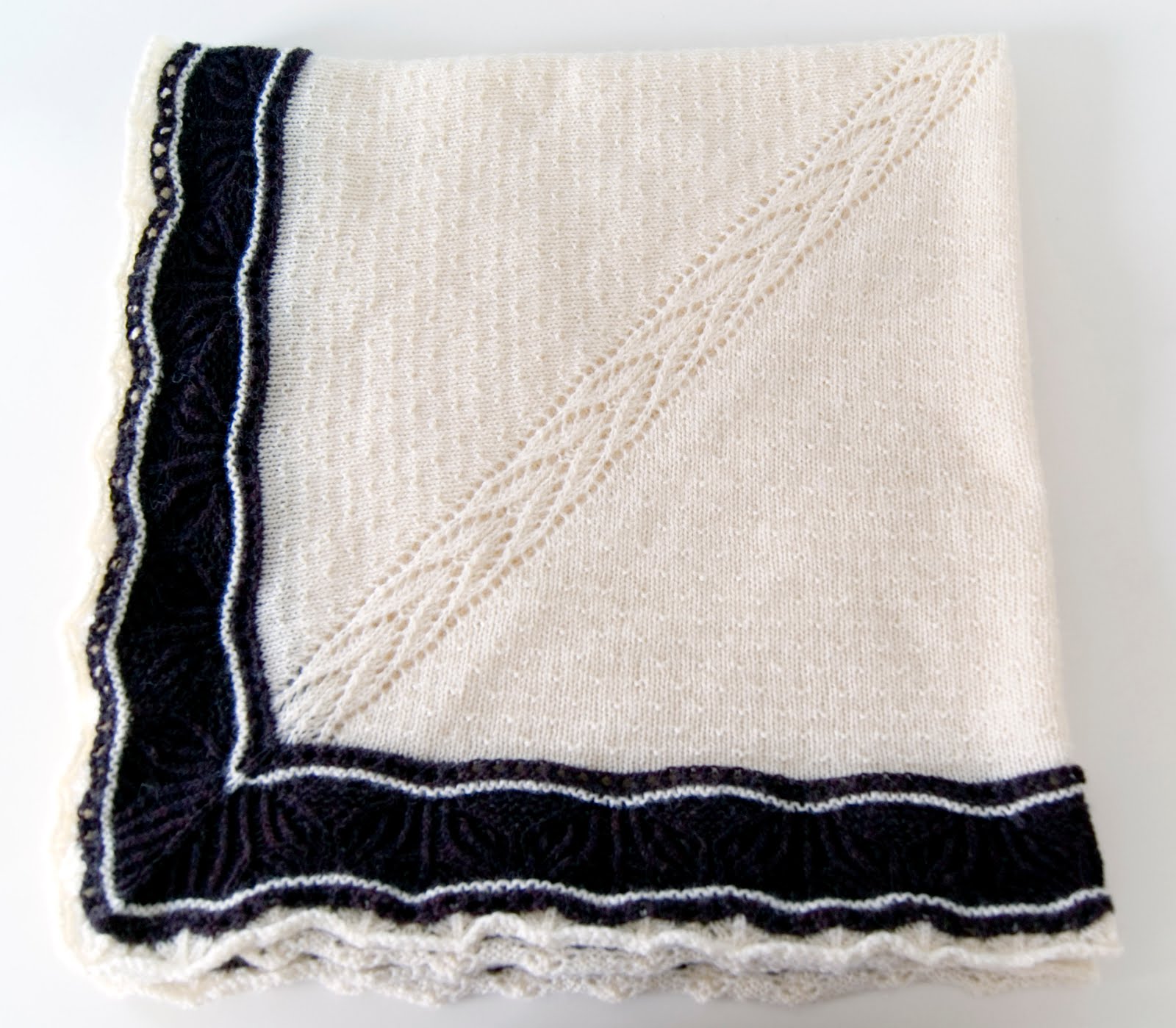
Testing the waters of this lovely Lakes Shawl, by Nadia Crétin-Léchenne.

The pattern itself is easy to follow, and you definitely don't need to bring the pattern around with you for the bulk of this, which is great if you like to take your knitting out with you! The central lace pattern is incredibly easy to remember, as is the textured body. I really only needed to consult the pattern again after I had finished all the increases.


lukknits testknit
Double the triangle, double the warmth

Now, because I can't seem to knit any pattern straight up - my mods:
  1. My gauge was waaaaaayy off, so I made it larger by continuing to increase with the central square and ended up with 9 repeats of the outer lace border instead of 7 repeats. My finished shawl ended up around an inch larger than the pattern dimensions.
  2. For any decreases that had to do with stitch adjustment (as opposed to lace pattern), I did them before the yo in the previous row, so as to keep the integrity of that lace pattern all around as best as I could. I know it's just one little yarn over hole per corner, but it bothers me!

lukknits testknit
Quartered

Next time I do a square shawl, I'd probably want it to be even larger, to be honest. The Lakes Shawl is a great size for scarf usage, but I like a bit more security when having a shawl wrapped around my shoulders, and the Lakes wingspan is just a bit short.


lukknits testknit
fwip

Thursday, November 3, 2016

1/Edition

OKAY Collective, Dashwood Books, Type Books, dispatch, blank cheque, Seth Fluker, Troy Gronsdahl
Haul of business cards


This year was the first edition of 1/Edition (see what I did there? eh?) at the Metro Convention Center, and, having to do with prints and books as it does, and prints and books being the stuff of my dreams, I had to go take a look. There were a ton of artists, collectives, galleries, bookstores, and more, and it was very exciting to see what everyone was doing!

I ended up getting a couple of - I want to say artist books, but would these be considered "books by authors" or "artist books"? I'm going to go with artist books.

Drawn and Quarterly
Mini haul of books - there were so many more I wanted to bring home!


There were a bunch more books - part of the first run of a reprint of the Moomin novels, for example, except I really don't need to start reading Moomin from the first print - that I wanted to bring home with me, but I held back because of reasons stated before to do with my bookshelf & my growing collection of books.

Drawn and Quarterly


Animals with Sharpies by Michael Dumontier and Neil Farber is incredibly engaging, in a tongue-in-cheek way that acknowledges some of the different characteristics of the animals portrayed in the book through the messages they are made to write down. Some of the animals are almost, if not, unrecognizable, which adds another layer of complexity to the images: it becomes a matching game and a test of your knowledge of the animal realm. Admittedly, my own knowledge is rather pitiful, and so some of the animals that are shown in smaller parts remain unknown to me, but the messages remain, baffling the viewer (or at least myself, because I am unaware of the speaker/writer and its relation to what is written) while at the same time providing a window to accessing the contents of the book regardless of the reader's depth of understanding of the animal kingdom. Go get yourself a copy. Immediately.

One Sky Star World Team Alliance by Stefan Marx, on the other hand, consists entirely of illustrations of airplanes that the artist either has been on or saw throughout his travels, or so the person at the Dashwood Books booth told me. The illustrations charmed my socks off, and started my string of purchases at the convention; some of the planes are portrayed in full, some are cut off, while some still feature in a 2-page spread, and that is part of what makes them so lovely: it's not just a collection of illustrations of planes, so much as a collection of the memories and places in the form of planes, the portrayal of which differs depending on the artist at the time.

There was one more book I wanted to purchase very much, although I couldn't justify it to myself then since it's a commercially produced book that I should in theory be able to purchase at a much later date: The Little Mermaid, by Hans Christian Anderson & Yayoi Kusama. I had seen parts of it on Brain Pickings and desperately wanted to read it in full through, say, my local library, but as expected, we don't own a copy. Nor am I saying we should carry it necessarily, considering the sort of book this is and the size of its readership and us being a public library. This retelling of the Little Mermaid takes you to another world with its illustrations, and it's going to be something for me to save up for. I'm going to make room for it on my shelf!

Type Books - because I didn't get The Little Mermaid


And then there were these adorable pins at the Type Books booth (along with the Little Mermaid), so because I didn't get The Little Mermaid, I got myself these two instead. There were a bunch of different designs - one for Magritte and a Bowie one, among others - but these two broke out of that conventional yellow smiley face shape and stole my heart. Dali's going to a friend, and the ice cream (I've been told it looks like poop though) stays with me.

So much for my 1/Edition haul! I completely forgot about Canzine in my excitement for 1/Edition, unfortunately, but I'm hoping I'll be able to make it to the Book Arts Fair at OCAD on December 10! There's also the Antiquarian Book Fair happening at the AGO this weekend (Nov 4 - 6) apparently, so I might drop by there as well to take a look. There are so many book and print events happening about town these days!

Tuesday, November 1, 2016

October Reading

In which I rant vociferously about the first book on the list.
  1. The Borgias and Their Enemies: 1431-1519 by Christopher Hibbert
    • I've said a little spiel about this back in September, but I'm sure I'll repeat some complaints here. All quotes are taken from this book.
    • On the topic of Jofrè's consummation of his marriage (or lack thereof) with Sancia
      • An excerpt from Burchard, quoted from Hibbert: "the groom embraced his bride without shame" (p.59-60), and then later on in the book
      • "His immaturity may well explain why... Jofrè had still not consummated his marriage" (p.95), according to the accounts of one Venetian diarist, Marin Sanudo
      • Unless the consummation of marriage in the second quotation actually refers to bearing children rather than the act of sex itself, which Burchard details as having been witnessed by the legate & the King (i.e. Alfonso II), I'm a little confused as to why the two sources are saying different things - rather, I'm not confused that different sources have different information so much as why Hibbert has chosen to quote from both of them without making a note of the contradiction (if I am interpreting both of these passages correctly).
    • "Cesare was also angered by the favouritism being shown to his brother, but he was careful not to show his furious jealousy" (p.98)
      • On what grounds does Hibbert know about Cesare's "furious jealousy" if he was so careful not to show it? Did he actually mean to say, "assuming Cesare's guilt in the murder of Juan Borgia despite that there were multiple suspects and it was never proven in any case, we can then infer that Cesare must have been furiously jealous - this obviously being the motive for the aforementioned crime - of the Pope's love for Juan"? Sounds a bit like circular reasoning, but who am I to say?
    • "She was, however, like almost everyone else, wary of her brother and his sadistic streak" (p.93), although Hibbert cites no proof of her wariness, either in her behaviour or in direct quotation, so it's hard to see how we know about this.
    • Also, if Vasari is your best source concerning the topic of Pinturicchio (p.84-85), I am inclined to believe that the passage should also come with a warning about the unreliability of Vasari as a source, which is not to say I'm discounting Vasari completely so much as saying it would be great if reference to him came with a disclaimer. See Vasari on the topic of the Mona Lisa and her wonderfully rendered eyebrows.
    • THERE WAS SO MUCH MORE TO BE SAID ABOUT CESARE AFTER THE DEATH OF THE POPE. Hibbert made the choice to focus on Lucrezia after the election of Giuliano della Rovere as Pope Julius II, glossing over pretty much everything Cesare tried to do to secure power again by checking in with him from Lucrezia's POV, that is, "Then, on April 22, 1507... one of Cesare's squires, who had travelled from Navarre [told] Lucrezia that her brother was dead, killed in battle, as Cesare had always suspected he would be, some six weeks earlier, fighting for the king of Navarre" (p.291)
      • I understand that this is not a book about Cesare, and that due to the slim nature of the book, there was a lot of information that didn't quite make the cut. That being said, nothing was said at all about Cesare actually going to Navarre: how did he arrive there from being imprisoned in Chinchilla? What about his attempts at escape?
      • Also, on another subject, what of Cesare's strictness with his own troops, e.g. when attempting to take Faenza, resting at the nearby town, banning theft from the citizens on pain of death? I can't much remember where else I was thinking while reading that quite a bit of information didn't make it into this book, and that it's pretty much all the ones that would have made Cesare seem less of a monster.
    • Let's end this on a positive note though: I learned a bit more about Lucrezia. I have to approach whatever I have read about her with a touch of skepticism and suspicion of bias on the part of Hibbert, but I would say I did learn a little more about Lucrezia.
      • Sorry, I lied; I'm ending this on a criticism after all: even just for writing a paper for an undergraduate class on Cesare Borgia I felt inclined to at least read up on all the books & electronic resources I could get my hands on about Cesare in particular, in addition to searching up and bringing home with me materials on Lucrezia, even though time prevented me from cracking into Lucrezia. All this to say: wouldn't it be best to do as complete a research as can be done into all personages involved in the Borgia family relevant to discussion if you're going to write a book generally on the Borgias? (I would even say to do further research on "their enemies" to see if all the facts match up, as well as to offer insights as to possible interpretations of actions the Borgias took or may have taken, and (political or personal) motives for both sides for doing what they did.)
  2. The Little Girl Who Was Too Fond of Matches by Gaétan Soucy
    • I was pretty confused for a bit after reading this, although not nearly as much as with The Epiplectic Bicycle. Soucy turns the traditional fairytale archetype on its head: the prince charming arrives, sure, but on a black steed that brings with it the noise of destruction, not to mention losing to the antagonist, being powerless to save the damsel. I'm sure there's a bunch here to write about on the themes of religion, fairytales and myths, with a particular focus on Soucy's use of language and how the reader should interpret all the events written by this "secretarious", as it is all through her eyes.
  3. On Paper: The Everything of Its Two-Thousand-Year History by Nicholas A. Basbanes
    • Pretty comprehensive, but doesn't cover much how to actually make paper, since that's not really the topic of this book. To be honest, because I read this as an e-book & over the course of many days, in between doing other things, I'm sure a lot of this just wasn't retained at all, so I can't be a good judge of this book. It served its purpose well, and I'm pretty sure I learned a lot from it, but I can't think of anything in particular to say about it.
  4. High Rise (2015)
    • I feel as though the message was supposed to be about class divide and the absurdity of it all, but I can't help but simply wonder: what did I just watch? Perhaps I'm missing a lot of references (e.g. the Margaret Thatcher statement at the end about capitalism, which I suppose was supposed to sum up the entire movie in the sense that power - money - was held in the hands of the architect & higher floor residents, and how the mess of this movie came out of that, except is there more to it than that?), but I was so very confused and lost throughout most of it. I mean, a couple of times I thought there might be a slightly more coherent plot coming up, e.g. when Laing told Toby something like, "when I was your age, I was always covered in something. Mud, jam, failure. My father would never associate with anything dirty" or something along those lines, and I thought, oh here we go, it's going somewhere! Except it totally wasn't! Or if it was, it was a bit too obscure for me to realize it.
  5. KL: A History of the Nazi Concentration Camps by Nikolaus Wachsmann
    • This was an incredibly comprehensive and detailed history of concentration camps, starting from pre-war following post-war decisions regarding the camp property and grounds. Well-written and easy to follow, although there's a lot to keep in mind at once because of the vast reach of the KL, in addition to which although there were a number of familiar names (from If This is a Woman), I still had a bit of trouble keeping up with all the names of SS officials and officers, not to mention specific prisoners. In comparison to If This is a Woman though, it was more well organized, and felt less like it was jumping all over the place, with fewer one-off prisoner mentions (or at least with the impression that there were fewer of them).
  6. Bad Singer: The Surprising Science of Tone Deafness and How We Hear Music by Tim Falconer
    • Not quite as in-depth as I had expected for the parts to do with the actual science of tone deafness, although I suppose the importance of timber was a bit surprising. Not in the "I never even considered it" sort of way so much as having an actual term to whenever I think about the colour of a song, or the taste of it, the round quality of a song or a note that's almost like a bubble at its peak - neither sagging nor about to pop, but holding robustly - and other sorts of similar descriptions.
  7. The Setting Sun by Osamu Dazai
    • To be honest, I'm not quite sure how to feel about this. The letter from Naoji to Kazuko, at the end, was I think the heart of the entire novel. I enjoyed it, but if I had to say, No Longer Human is for myself more relatable, and by far more tragic. Naoji's  attitude regarding oweing people debts and letting people pay for you, however, I can relate to more than I would like to; there's something to oweing debt in any degree to anyone for any amount of time that strikes me as unpalatable (though not entirely unavoidable at all times, or for the sake of convenience), and that rigidity, not limited solely to the subject of monetary debt, appears to me what drove Naoji to suicide, in large part. Oddly this standard does not apply to my treating others or having others in debt to me, and although I doubt (or at least I truly hope) I don't hold it over anyone's head that they owe me money or some favour, I wonder if there's something in it?
  8. Snark: It's Mean, It's Personal, and It's Ruining Our Conversation by David Denby
    • It makes me wonder whether any - all? - of my biting humour might be called snark. I would like to object in part to Denby's statement about everyone's involvement in celebrity culture though: I'm pretty sure I live under a celebrity-cultural rock. That being said, perhaps I'm more embroiled than I'd like to think and am simply in denial.
    • The shallowness of this slim volume is a touch disappointing, as I was hoping for more history and etymology, more in-depth discussion and analysis, something much more engaged and personal, than was presented. Of course, the slimness of the book should have signaled as much, but I had high hopes, expecting something like, perhaps, Snobbery (Epstein). As it is, Snark only scrapes the surface and leaves the reader hanging, dissatisfied. I suppose if I were so inclined, at this point I should make a further inquiry myself into the subject, but when the title is so snappy and promises so much, it's a bit hard to lift myself from my disappointment in search of more on snark.

Working on:

Friday, September 30, 2016

Try to Remember

The kind of September... Where I finally start on the weaving project I was supposed to be working on all throughout the summer as well as got ready for my Introduction to Bookbinding Workshop (tomorrow!).
  1. Criminal That I Am: A Memoir by Jennifer Ridha
  2. flesh and bone (2015 miniseries)
    • Everyone needs a Pasha in their lives. Everyone.
  3. If This is a Woman: Inside Ravensbruck: Hitler's Concentration Camp for Women by Sarah Helm
    • My comment on this is going to be shorter than I would like it to be simply because of the nature of this book, but it was so incredibly difficult to keep up with all the characters, what with the way the chapters picked people up and dropped them and some would show up again and some you might never hear of for the duration of the book! I understand that to write the events in a chronological order would make it so that you would have to jump around here and there to talk about these people, then those, but still! The atrocities started to blend into one another towards the end, which really makes clear how easily one can grow numb to it, but it really struck me at the end the woman who went home (I believe to France) and got a jump in line for food handouts because she was too weak, and when someone told her off for it, she responded that she just came back from a concentration camp, to which the man retorted "mais quand même, they have to line up in concentration camps, don't they?". For which she hit the man. That brutal insensitivity, right in the face of the person who had to undergo that! Thank goodness she hit him.
  4. The Book of the People: How to Read the Bible by A.N.Wilson
    • Well with a title like that, I suppose I should have expected the tone that the author took throughout the entire book - not that I disagree with it per se, it's just that what I'm interested in is something a little different. I guess I was expecting more of a critical look than what the message I took away from it came out to be, namely something along the lines of: don't read the Bible literally (... duh?), stop trying to force your own views and interpretation of the Bible onto others (again, duh?), and God is the living word, through which one's life can be enhanced if only it is lived and acted upon (which is swell and all, don't get me wrong...). But this could have been a much better book. Perhaps I was simply reading the wrong book for my interests. What I did take away from this book that I think I might want to follow up on is that I should read the Bible. Although that's kind of a lie: How to Read Literature Like a Professor re-implanted the idea in my head (it's been there since high school at least, if for all the wrong reasons, something like "keep your friends close and your enemies closer", not that religion was ever my enemy, so to speak), so it's more like this book gave me more reason to actually read The Book.
  5. The Storytelling Animal by Jonathan Gottschall
    • A seemingly very large section on memory and how fallible memory is. I also just recently queued up a book about memory (and identity): The Memory Illusion. I haven't read it yet, but somehow things always make sense in terms of how I queue up what to read next, even if by the time I get around to it, I've - the irony! - forgotten why.
    • "J. K. Rowling's Harry Potter books... are twice as long in their entirety as War and Peace" (p.276). Well golly. Now I have even less excuse to not have read War & Peace!
  6. Quicksand by Steve Toltz
    • I very much enjoyed reading A Fraction of a Whole by Toltz a while back, so when pondering over what fiction to read next, I figured I probably wouldn't go wrong with more Toltz. Rambling, vaguely articulate yet very disturbed characters seem to be Toltz's thing. Not that I'm complaining, since I very much enjoy these characters, but all the same. There's a sort of surreal, almost forced - forcedness - to them, in that they are so incredibly thrown, although they don't disintegrate into flatness because of that, which I think is a piece of work in and of itself. That being said, I enjoyed A Fraction of a Whole more than I did Quicksand, in that I was able to immerse myself much more into the world of the story. I'm sure I missed so many allusions and references to other literary works in both novels that there's much to be said about reading them both again, with a bit more focus, but in terms of the sort of relaxing read that is about all that I'm in the mood to read about right now (in terms of ease of reading, not in terms of being uninformative or uncritical), this ranks a little lower down the list than expected, based on my memory of the first novel.
  7. Born to Be Blue (2015)
  8. The Memory Illusion by Julia Shaw
    • I'm probably remembering wrong, or not all of what I read, but I'm almost positive that I learned all this at some point or another throughout my psychology degree, to some degree. Which is not to say that a reminder course every now and again isn't good to keep me on my toes and continue to make me doubt my memories & their veracity, but anyway. A great crash course into the fallible nature of memories.
    • Does this mean we fabricate our own identities more than we may like to admit? In that case, shouldn't we simply own up to it, and not say that we're "phony" (rather to die than to be phony, was it? Catcher in the Rye reference referenced in At The Existentialist Cafe), but instead make full use of our freedom to choose who to be?
  9. At the Existentialist Cafe: Freedom, Being, and Apricot Cocktails by Sarah Bakewell
    • Alternative title suggestion: 50 Reasons You Should Be In Love With Jean-Paul Sartre
    • I read this book very much as a love story.
    • Bakewell renders Sartre into literally the most adorable human being of all time, in the same way in which I view Plato's portrayal of Socrates as being adorable, except maybe more so. Just a teaser: when tasked to write a foreword for Genet's book, Sartre hands over a 700-page manuscript, though no word on whether he got that foreword done or not; and even though he didn't know much English, by the second time he went to America, someone (I forget who) was struck by his loquacity despite that little inconvenience - I'm paraphrasing Bakewell here, but, he couldn't say much, but he just wouldn't shut up! Also, Bakewell does wonders with the literary device of foreshadowing. Reading Sartre's foibles & (what appear in hindsight and at a remove, as I am reading now) horribly executed freedom - his practice of existentialism within his own life? - is akin to what I would imagine watching a trainwreck would be like, except combine that experience with that depicted in No Longer Human (by Osamu Dazai). On the topic of Camus' death, Sartre noted that he was probably the last good friend (despite their major falling out prior to his death after which communications were superficial and sparse). Merleau-Ponty, on the topic of Sartre, spoke something along the lines of "Il est bon", even if it doesn't come across in Sartre's writings, etc. He is essentially good, and in Bakewell's portrayal of him, it is heartrendingly sad in a way that rips you apart precisely because you know he is doing what he thinks is in the best interests of everyone, or he thinks he is right, and is only doing what is in accordance with what is right. For all his decisions that might be frowned upon, he was essentially good. That's what makes Bakewell's rendering of his story all the more tragic.
    • Bakewell has an incredibly engaging style of writing and I would very much like to read her other works. It probably helps that, like her, I was besotted with Sartre & the idea of existentialism in high school, very likely around the same age as she was when she became enthralled with him. And I still remain so now (if it wasn't obvious by the above paragraph on how adorable Sartre is and how I basically have no trouble at all believing that for all his physical imperfections he had no troubles scoring lovers & admirers), if in a slightly different way.
  10. The Epiplectic Bicycle by Edward Gorey
    • ... what did I just read? Did I miss a joke, or some allegory, or perhaps a variety of literary references? Did some literary devices just pass me by? I'm so incredibly confused. What does epiplectic even mean? Why 14 yellow boots? Why an obelisk? WHO ARE THESE SIBLINGS?
Working on:
  1. KL: A History of the Nazi Concentration Camps by Nikolaus Wachsmann
    • Saw it on a list somewhere, I think (new additions to the library, perhaps? I do believe I'm the first person to get this book), towards the end of my reading about Ravensbruck. Apparently there's a memoir by a concentration camp prisoner called If This is a Man, which I didn't know about, and which makes the title for the book on Ravensbruck (If This is a Woman) make sense also, as a nod to that. But Helm also mentioned the phrase, 'if this is a woman' in some other context - poetry, I think? - and possibly also as one of those quotations that starts off a chapter; I'm not sure what those are called.
  2. The Borgias and Their Enemies: 1431-1519 by Christopher Hibbert
    • I'm halfway through this book or so and I have SO MANY THINGS TO SAY. But I'll satisfy myself with just one comment for now: if you're going to write a book about a historical subject such as this, which has been written about before, and recently to boot (e.g. Meyer), and you're not going to contribute anything new, in either sources or interpretation, and it's not even going to be as thorough - perhaps I'm being too harsh here, so let's tone that down to more thorough - than the previous books, what's the point? I did a research project for my personality disorders course on Cesare Borgia, so maybe it's only because I've read up on at least one person from the family (though all of the books touched upon pretty much all the members of the family) that I'm incredibly frustrated and tempted to just drop this book altogether. That being said, I want to believe there's some redeeming feature to it, so I'm going to finish it before ranting on.
    • I lied; one more note: there are no footnotes/endnotes/in-text citations. Zilch! Nada! How are the readers supposed to know who said what when, and judge whether the sources are reliable in which circumstance? I mean, anyone looking to read about the Borgias has more than enough old sources if they want to read about juicy gossip and myth-making. Is this actually just a gossip column on people long gone? A republishing of all the malicious rumours? It seems as though Hibbert has just been repeating every slander that could possibly have been said against the Borgias and not looking into the truth of every one of them as far as can be investigated; he is very clearly biased in his approach is the feeling you immediately get upon reading. Anyway.
  3. The Evolution of God by Edward Wright

    Knitting Block (Still Weaving Though!)

    Weaving a pie crust recipe


    So I haven't actually knit anything for what seems to be a very long time. I've been working on the burgundy cardigan (top-down, raglan, v-neck, pockets) for a while and just passed the armholes, but I'm really just not feeling it, so it's going to be frogged. I just ripped out my red dress (third time is decidedly not the charm) that had been on the needles for a very long time indeed. I haven't been working on that black brioche dress either, for which I'm in the process of deciding whether to rip out and start over as a regular ribbed turtleneck tank dress or to simply continue onward as is.


    Difficult colours to capture on a cloudy, cloudy day


    At the very least, though, I've still been crafting away! In reality, this was something I was supposed to be working on all summer, but which in fact I've only started some couple of weeks ago and finished the first part of a couple of days ago (it's a series). So I'm counting that as a little victory.


    Is it a scarf? Is it a table runner? The possibilities are endless!

    I was supposed to have had this done months ago, and by this point to have had the entire series just about complete. Sadly, I didn't realize how tuckered out I was going to be after complete liberation from the educational system that is university, so I wasn't able to follow the proposed (admittedly probably a little herculean) schedule I had submitted for my grant. I got right on purchasing the right colours of yarn from colourmart more or less immediately after I got the grant, so that I could start weaving anytime, but then lost all momentum once I settled into my new job/position. It didn't help that the yellow I had ordered for the butter colour turned out to be more like a turmeric yellow (I ended up using it in my mokoshi).


    I think I finally sat myself down and figured out ingredient weight ratios for some recipes (all pies, since those were what had started the series) on excel sometime around halfway through summer? And then my original plan was thwarted because Sandy, my floor loom, was too large to be set up in my room - or anywhere else in the house for that matter, apart from the basement, and there were a couple of logistics as to why not the basement. So I had all my materials, but couldn't do the twill that I had originally planned on doing, because twill! And thus completely fell out of it again.


    One pick of the subtlest of all clasped wefts probably ever woven

    In the end, I set up the table in my room again (since I had put it away for a good chunk of the summer months to free up some walking space) and set up Coraline, the AKL. I completely scrapped the twill idea after very briefly considering, then immediately discarding, the idea of doing a 3-shaft twill on the AKL. I figured I'd get pretty much the perfect sett if I simply used two 12.5dpi heddles to double the epi and didn't want to risk having a sparsely populated warp just so I could end up with a weft-faced twill. I'm very happy to say that I'm incredibly pleased with the way this wrap turned out! The yarn is incredibly soft, which helps a bunch, but the subtle hues and surprising amount of water content that goes into a pie crust, even if the majority of it evaporates, came out to be a pleasant surprise. I somehow expected much starker delineations between the ingredients (probably because I had originally intended them to be completely separate, one colour chunk after the other), but I quite like how randomly dispersing the ingredients turned out, both visually and as a parallel to the process of making the crust.


    Well-proportioned scarf.


    I'm thinking of putting the entire series into my etsy store once I complete it. For the time being though, work on that grant update in the hopes of being able to receive financial backing to complete it.

    Sunday, September 25, 2016

    INTRO TO BOOKBINDING @ MCGREGOR PARK LIBRARY (SAT OCT 1, 2-4PM)

    Culture Days TPL
    Waxed Linen Thread & Mini Bone Folder


    I've been getting ready these past couple of weeks or so for my Introduction to Bookbinding workshop on Saturday October 1, from 2-4pm at the McGregor Park branch of Toronto Public Libraries! The event is 100% free, so all you need to bring with you is yourself and preferably enthusiasm for bookbinding in some form! The workshop is going to take place as a part of Culture Days. There are a bunch of other (free) activities happening everywhere, so take a look and see what interests you!

    I drew up the instructions for a bunch of different bookbinding methods, with and without needle/thread, so I'll upload those to either here or my art happenings blog after the workshop. The first time I planned and ran a bookbinding/zine workshop, we ended up using Shannon Gerard's illustrations and handouts (with permission) from when she did a bookbinding workshop in our class, so participants this time get to have the first sneak peak at the booklet I've put together!


    Paper, needles, thread, rulers, etc. + decorative cover paper + instruction booklets


    The only thing I'm really worried about at this point is how many people are going to show up, since I realized somewhat belatedly that it would have made planning a lot easier had I made the event registration-required instead of drop-in. I have enough materials to be fully prepared for 15 participants, including pre-cut covers in rag paper. If any more participants show up, we'll just share the needles and see if we can cut some more paper on the spot. I'll be bringing my cutting mat and some scissors/x-acto knife for that purpose also.

    Regardless! The McGregor Park library is almost like the sister branch to the library I currently work at, across systems: they're both small community centre libraries (though McGregor Park is definitely smaller) and they're both closed on Mondays! So it was definitely meant to be! I'm really excited about this, so if you're free that day, feel free to drop by and learn how to bind your own books!

    Crossposted at lukprints.